 Away
Away Jet lag has its perks. I've done a poor job adjusting to the time change and was 100% fully awake by 5am this morning, so I worked for about an hour and then went and visited the busiest tourist spots before anyone else was up. There's a particular kind of silence you get on an empty European bridge at dawn—no buskers, no tour groups, just stone and fog and the occasional pigeon asserting territorial claims. The Charles Bridge was begun in 1357, and one of its statues is happily pointing out Prague Castle, which was begun in 870. We're talking about a bridge that's been standing since before Columbus was born, gesturing at a castle that was old when the bridge was new.
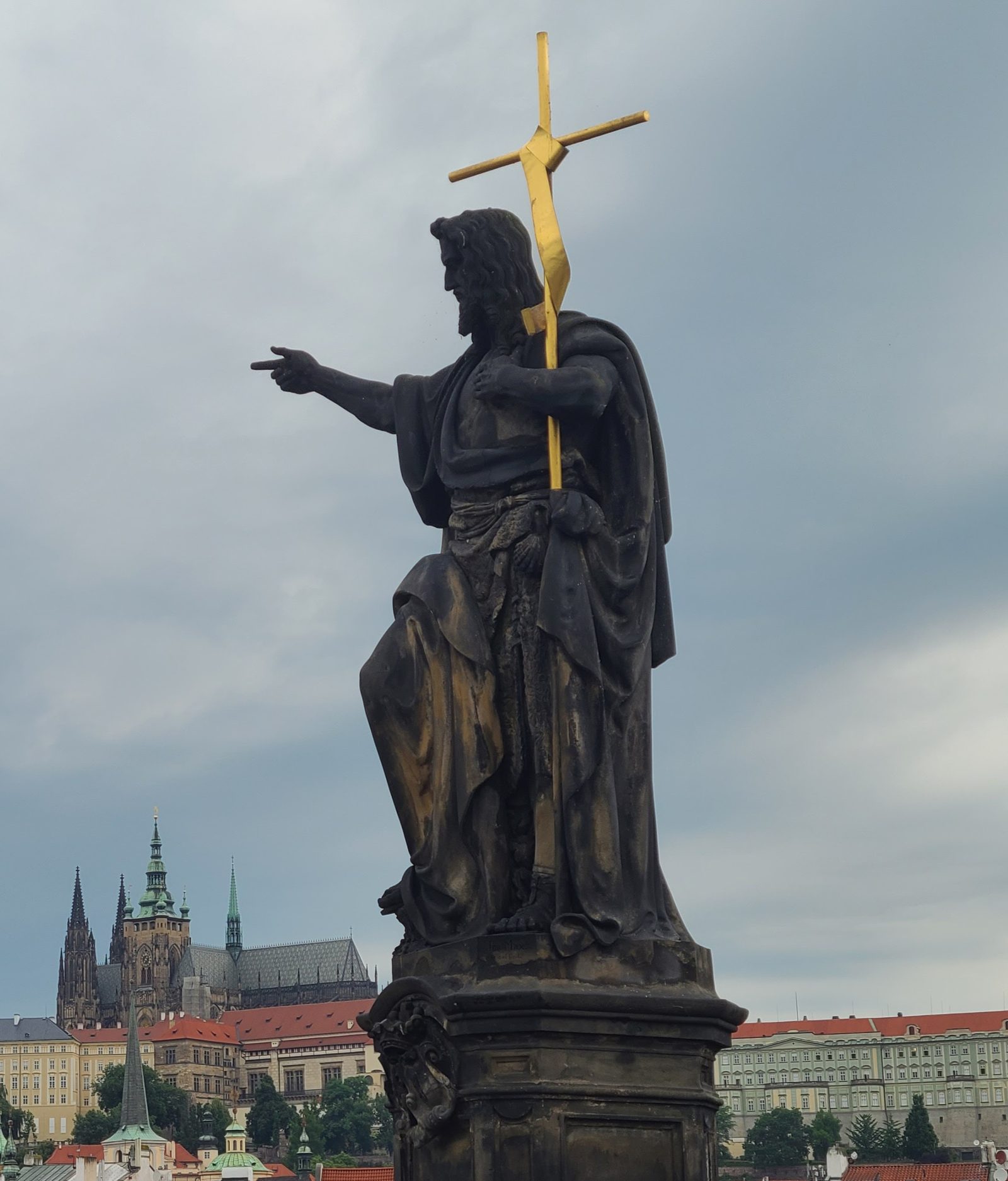
A statue on the Charles Bridge (begun 1357) helpfully indicating the direction of Prague Castle (begun 870).
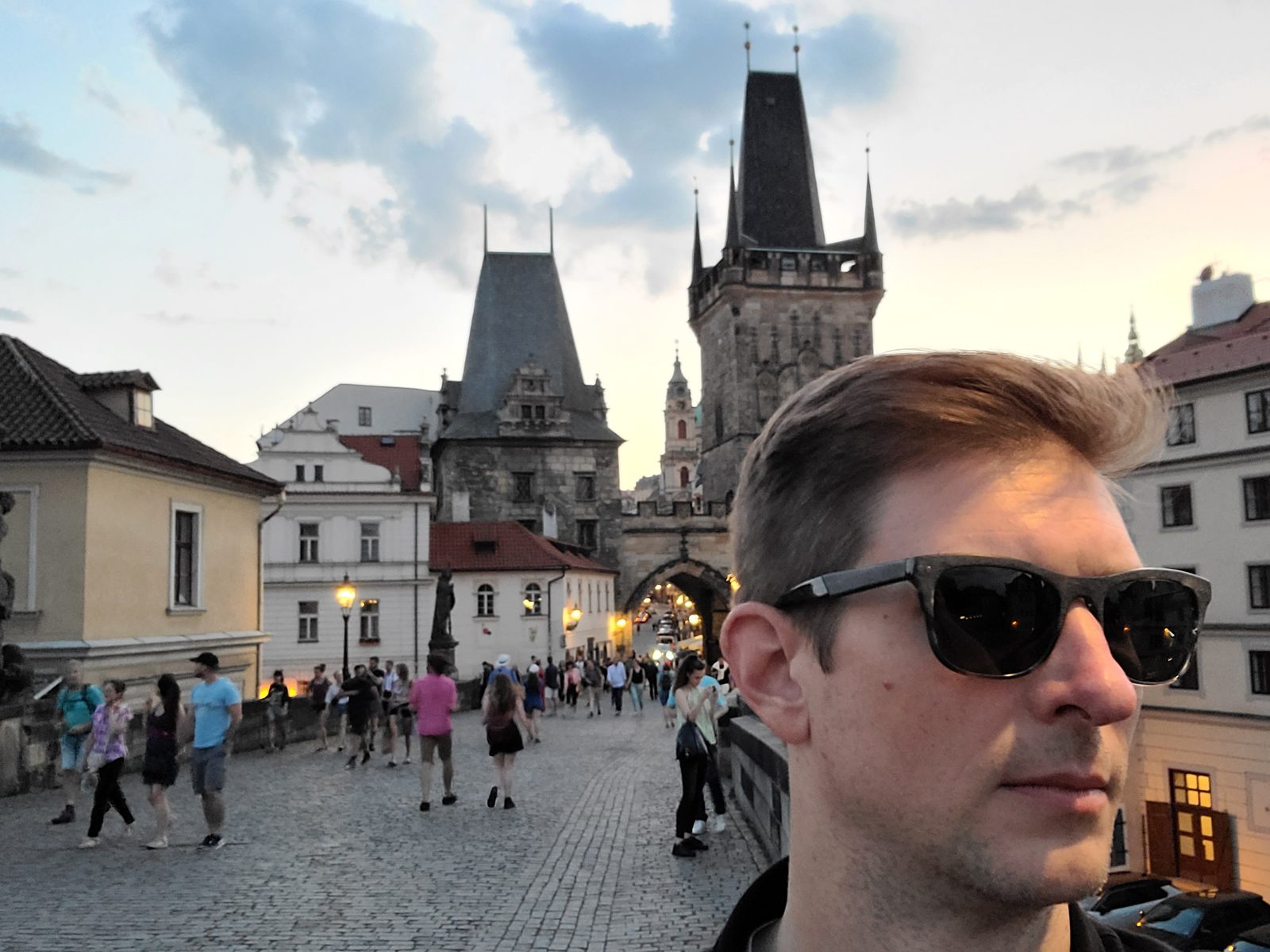
Your author at one of the bridge gates. Photography skills: developing.
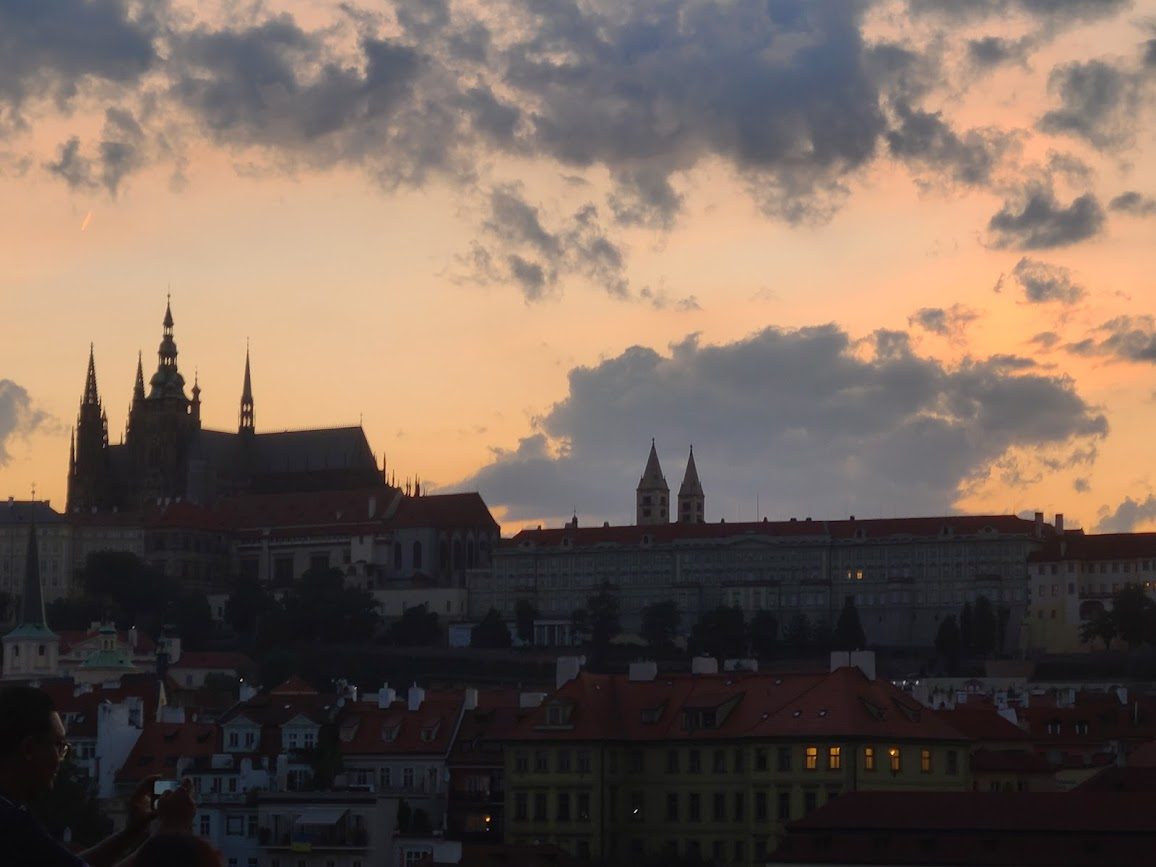
Prague Castle at sunset. Note how the modern parts of the complex—only about 400 years old—are built atop the original fortifications.
Churches, Churches Everywhere
The architecture of the city is fascinating, but I've been more attracted to the medieval churches. Prague is among the least religious cities on Earth, yet the city has over 600 churches. To make it even more interesting, Czechia has a deeply Protestant history, but the Habsburgs were strict Catholics and the dynasty built scores of ornate cathedrals and Catholic churches throughout the city and the countryside. So it's churches, churches everywhere but not a parishioner to pray.
But while the churches may not have interested parishioners, they certainly have interesting art. For instance, allow me to introduce the patron saint of Indecision, for he simply cannot decide which he loves more: his cross, or this brick. His counterpart, the patron saint of Certainty, is just down the street and he's so pleased he chose cross over brick that he has the wiggles about it.
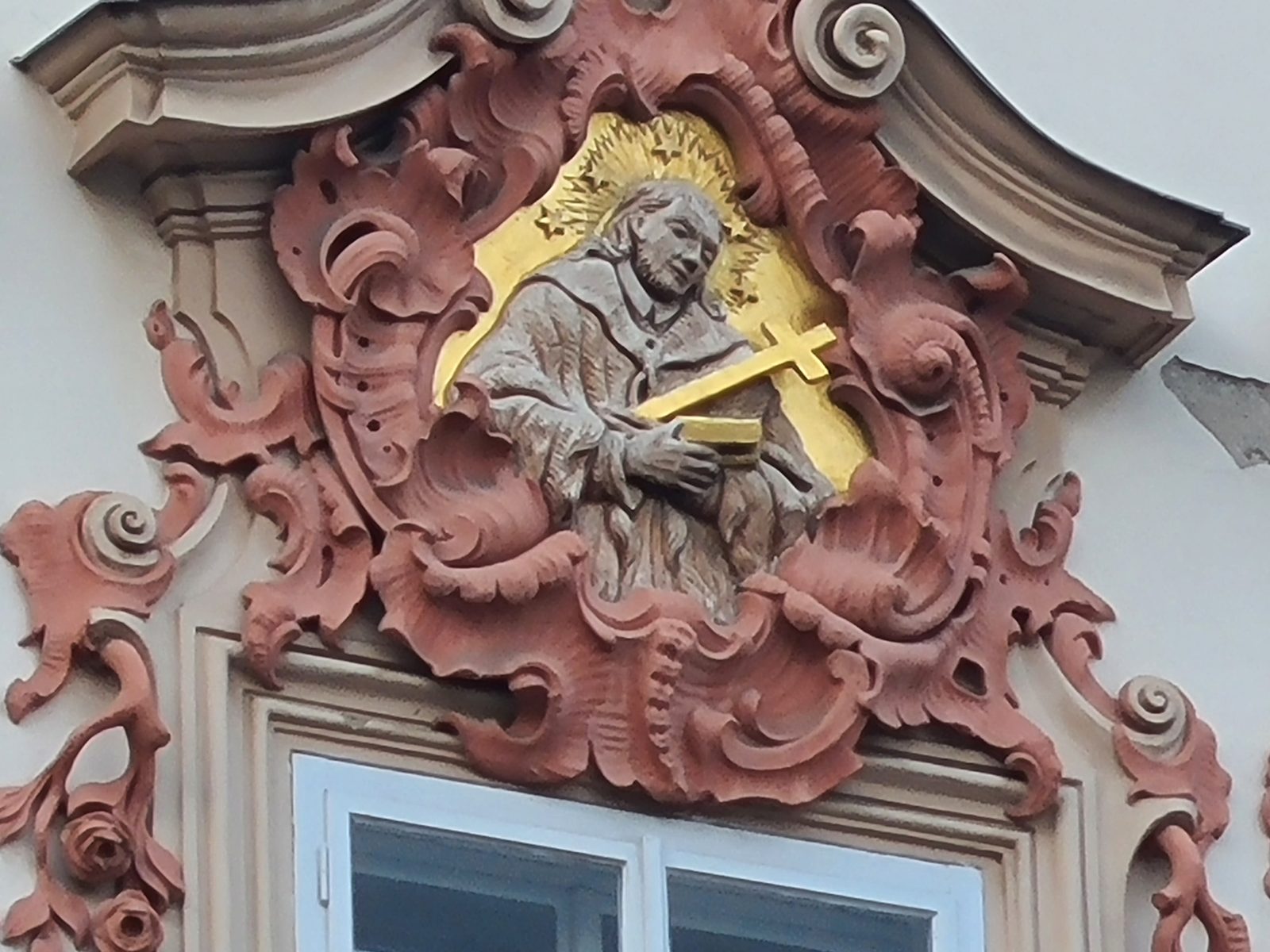
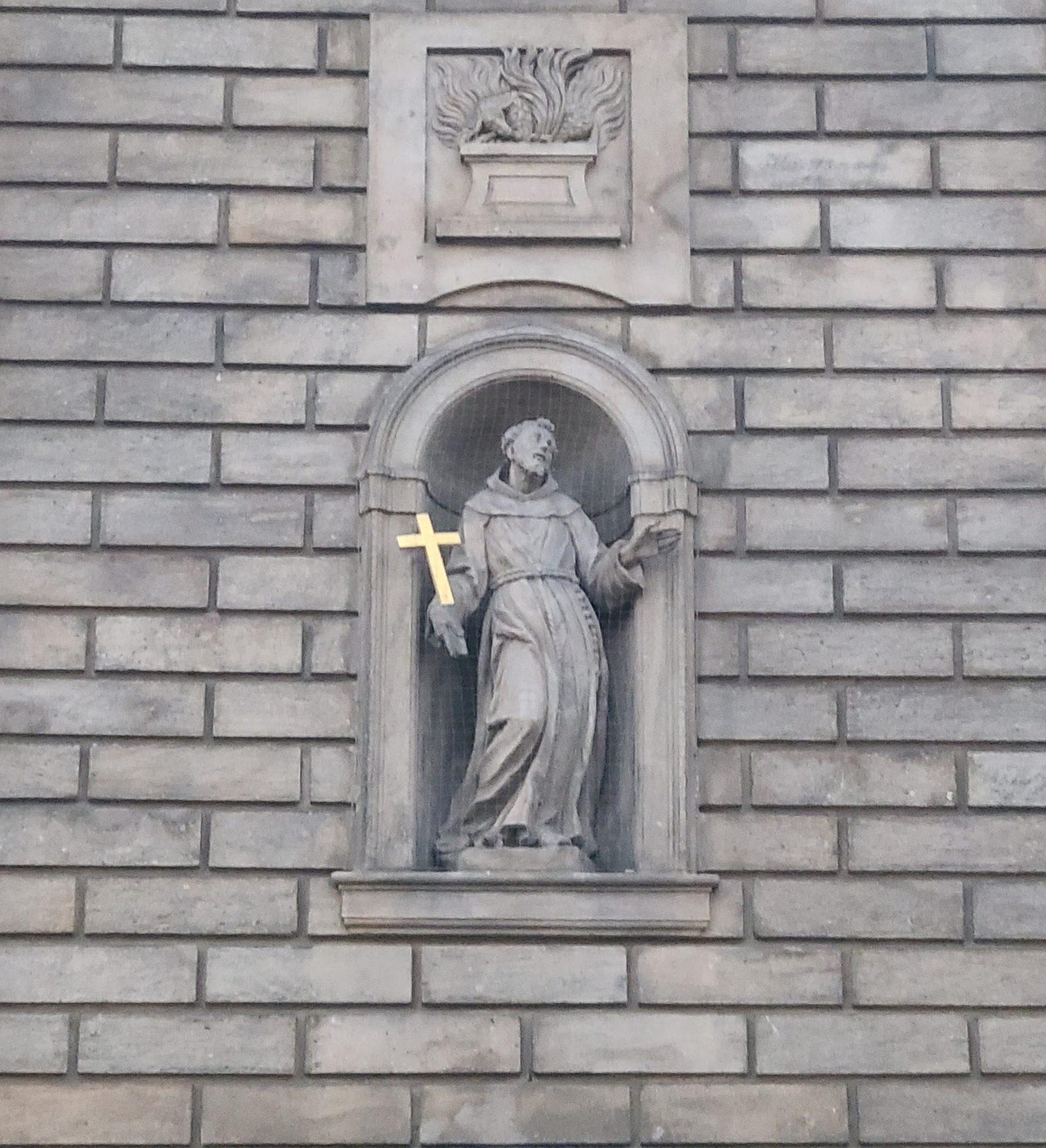
Left: The patron saint of Indecision, torn between cross and brick. Right: The patron saint of Certainty, thrilled with his choice.
And lastly, the patron saint of Angry Snowmen. Apparently they transmogrify in the summer.
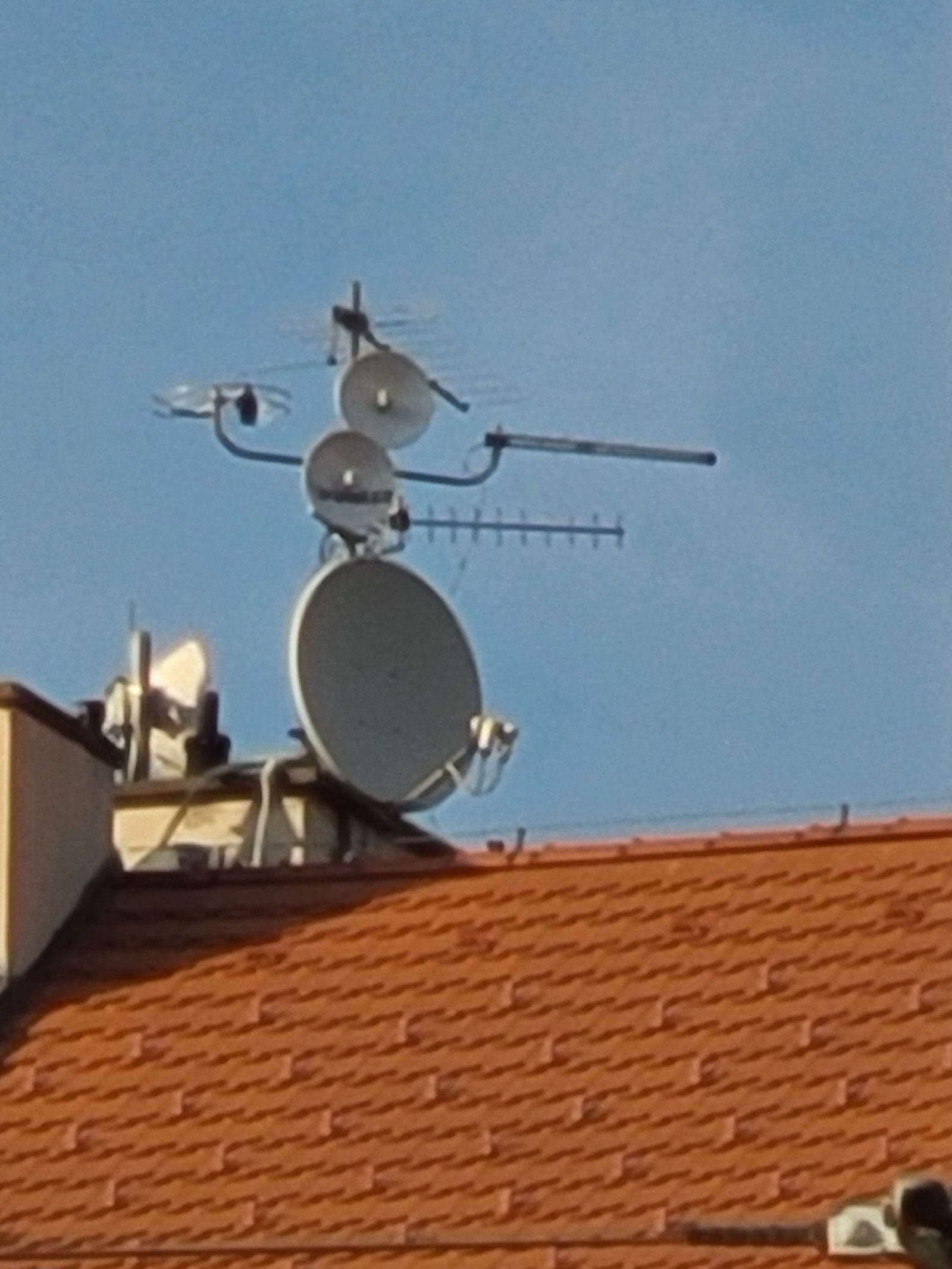
The patron saint of Angry Snowmen, in summer form.
A City That Peaked in the 1340s
Prague is beautiful everywhere. Around every corner is another row of architecturally-eclectic buildings flanked by a 700-year-old cathedral. Taking pictures starts to seem pointless after a while. We had a top-notch tour guide who talked to us not just about the history of the city but about how people think and feel in Prague and Czechia. One of the things I most appreciated was her very thorough explanation for why Czechs specifically—and many peoples of the region generally—are so sulky and downtrodden (and they are so sulky and downtrodden). The short version is that when your country gets invaded every fifty years or so for six straight centuries, it's kind of hard to be optimistic. Prague, she says, is a city that peaked in the 1340s. Since then, it's been invasions, Habsburgs, Prussians, Germans, and when the Soviets came and liberated the city from the Germans, the Soviets were worshipped as heroes. And then communism, which is a scar carried on both the city and the faces of the people.
Most memorable of all was her explanation of why Czechs always say "bad" if you ask how they're doing. She gave a long and detailed explanation that really encompassed how incredibly hard life in the Czech Republic was from 1918 until 1991. In terms of recent history, if you were Czech, odds are you were doing bad. So telling others about how happy you are or how much stuff you have or how awesome your kids are—the other person is probably not doing so well; why make them feel worse about their life by highlighting how good you have it? What kind of jerk would dare tell someone about their personal successes?
I wish I had videotaped her speech because I could never re-create the essence of it. By the end she had me thoroughly convinced that anytime I'm ever asked "how are you," I should just say "bad."
New Town (est. 1348)
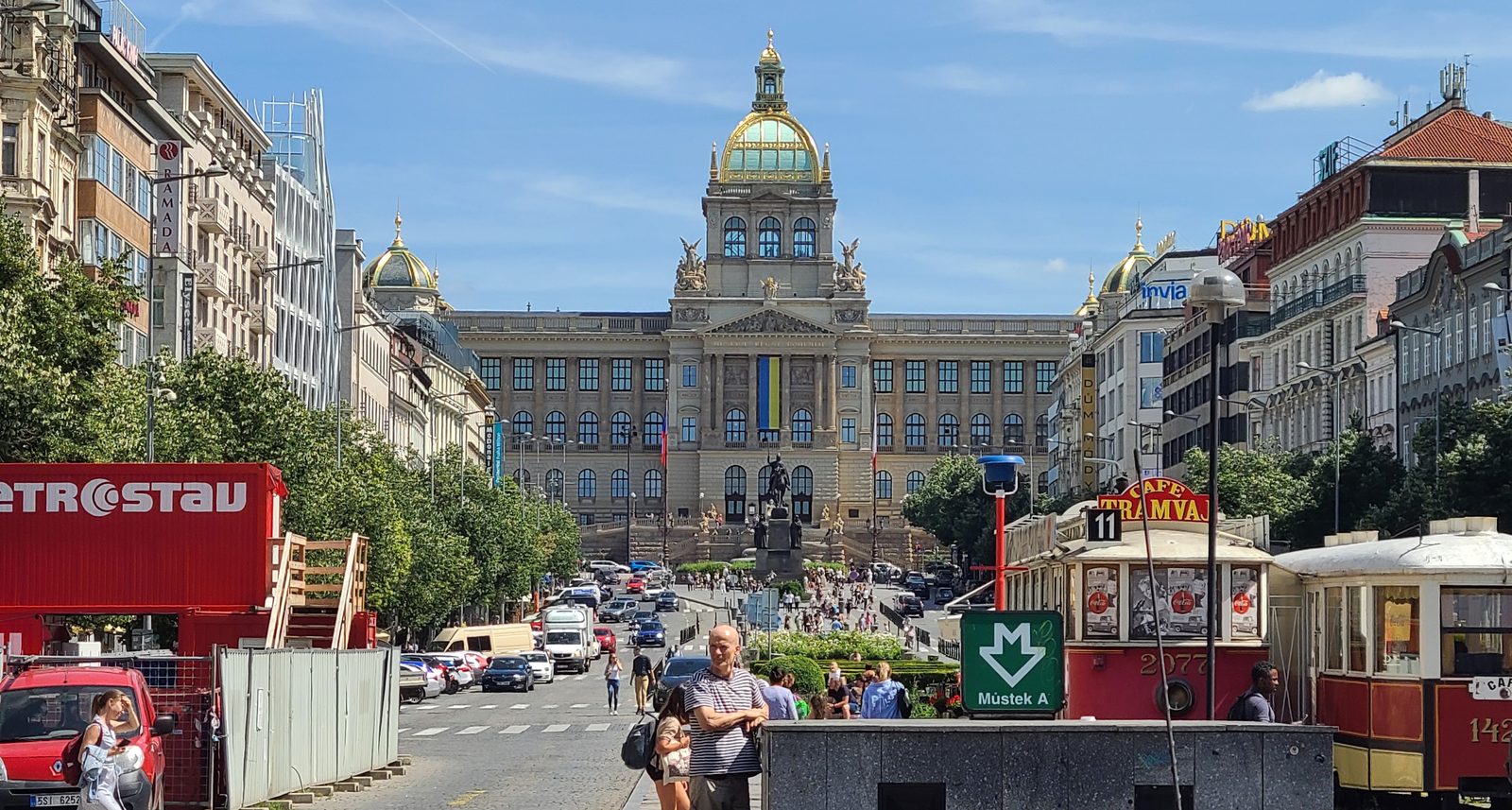
Prague's "New Town" neighborhood, which is only 670 years old. This was the block where the Velvet Revolution protesters would gather during the Soviet era. Over 300,000 people filled the square at times.
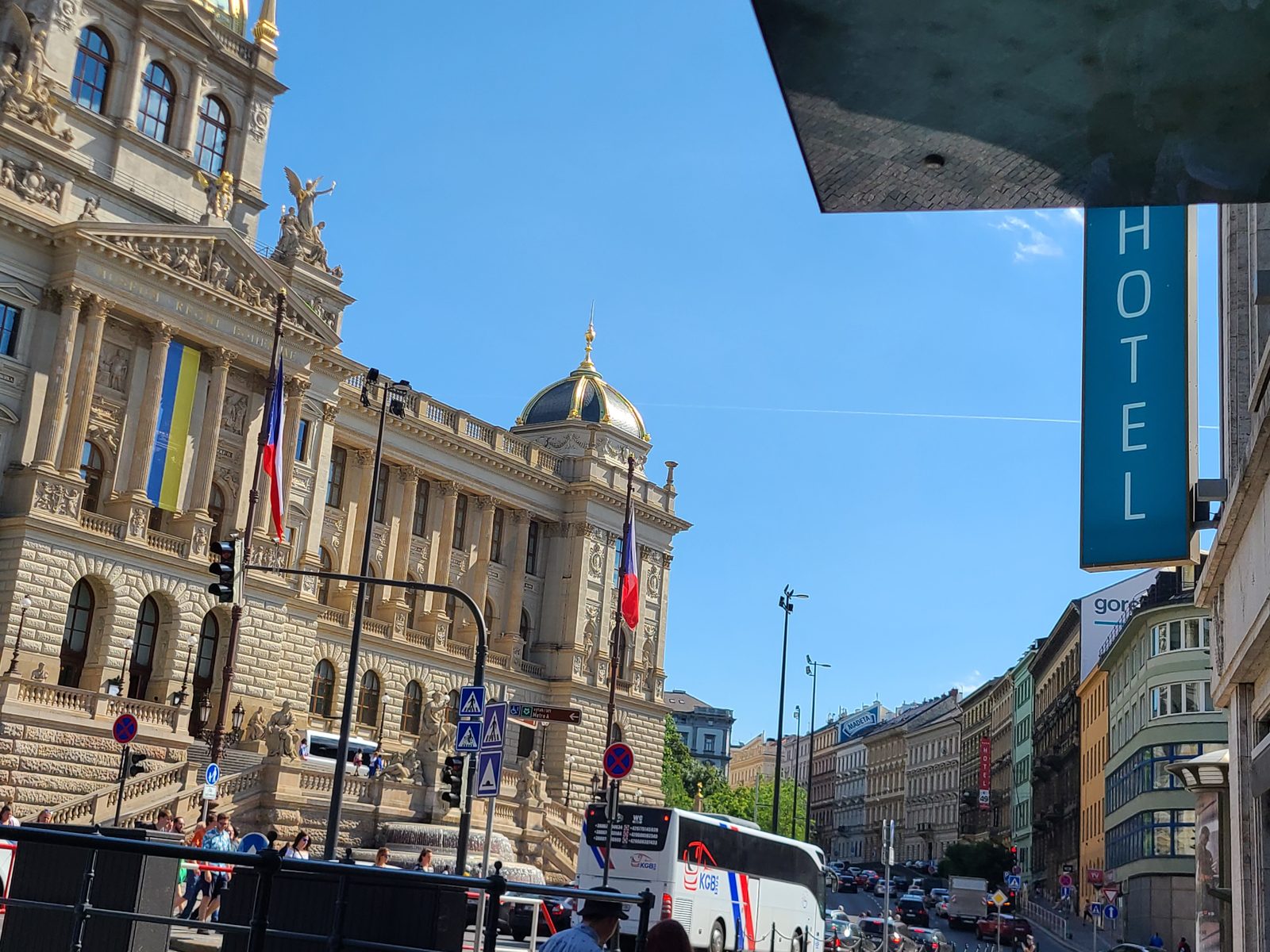
A closer shot of the same building. Notice how many bricks on the columns have been replaced. At one point, the Soviets sent the Red Army with tanks and 600,000 soldiers to suppress dissidence in Prague. The tanks started blasting this building, which the Soviets had assumed was the state capital. It's the natural history museum. The building literally says "Museum" on it.
Prague has amazing museums. With so much history and art and famous residents, a curious soul could spend a whole week just in the museums and leave happy. I have been to none of these museums, for I travel with college students. So here's me at one of the tourist trap museums.
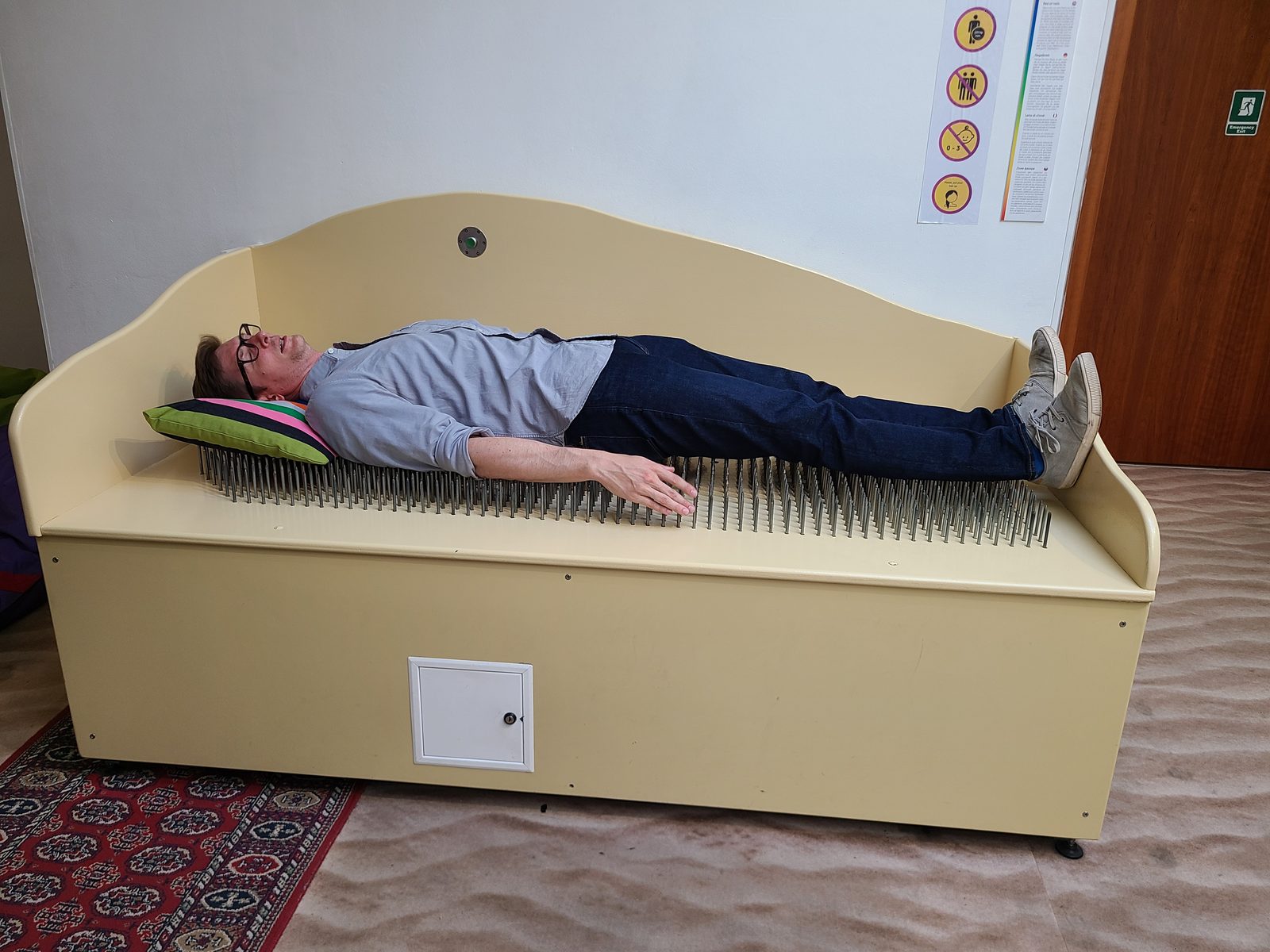
The things we do for education.
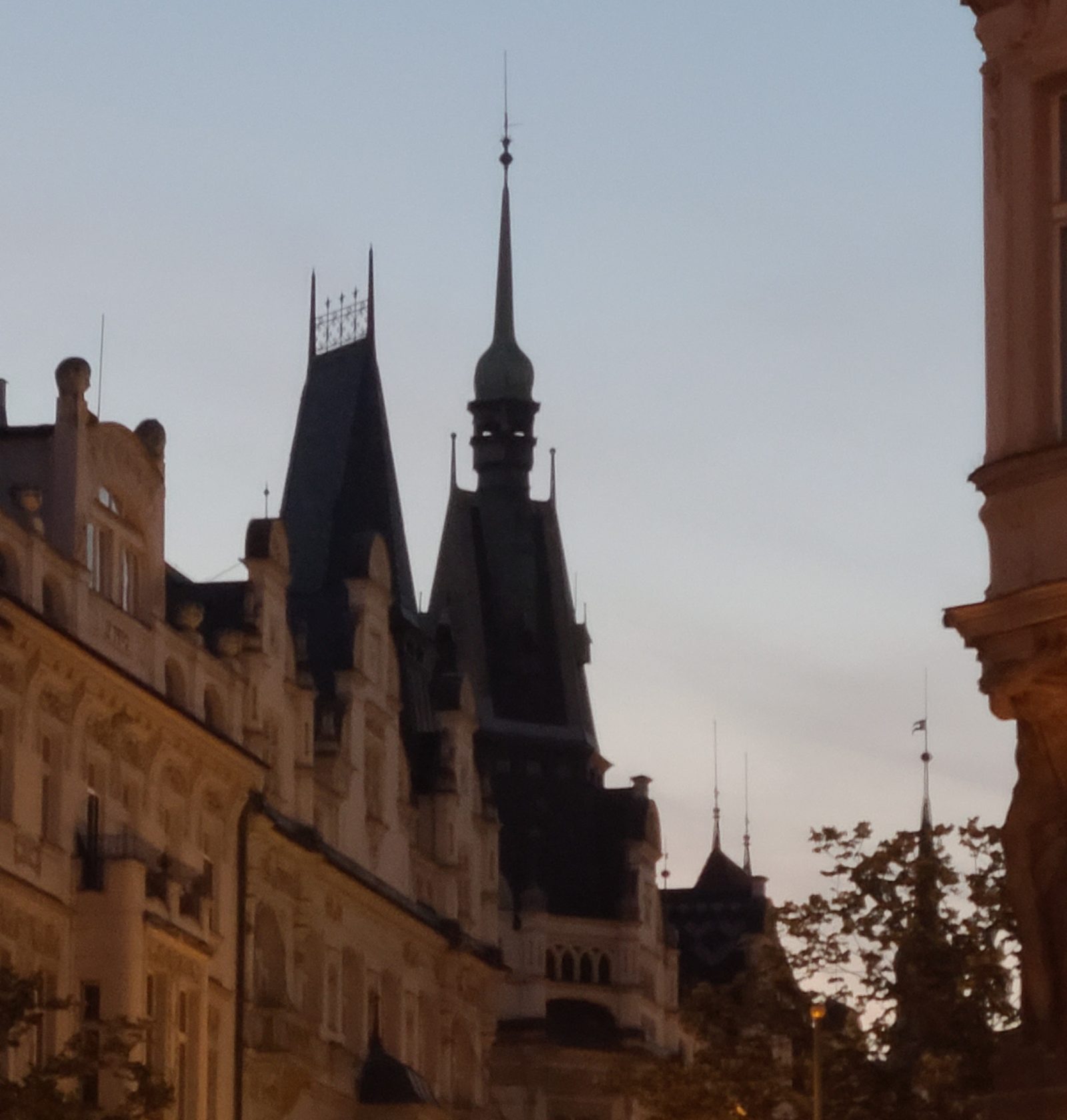
Prague is one of the safer cities you can visit on this Earth, probably because this intimidating silhouette watches over the city like Robert Pattinson over Gotham.
We met with a nanotechnology firm CEO whose company makes photo-reactive chemicals that attach to pollution, turning harmful chemicals into less harmful compounds. Far and away, though, the thing that most excited students during that particular business visit was a "Dr. T doppelgänger" someone spotted out the window. We had to stop the whole meeting and gawk.
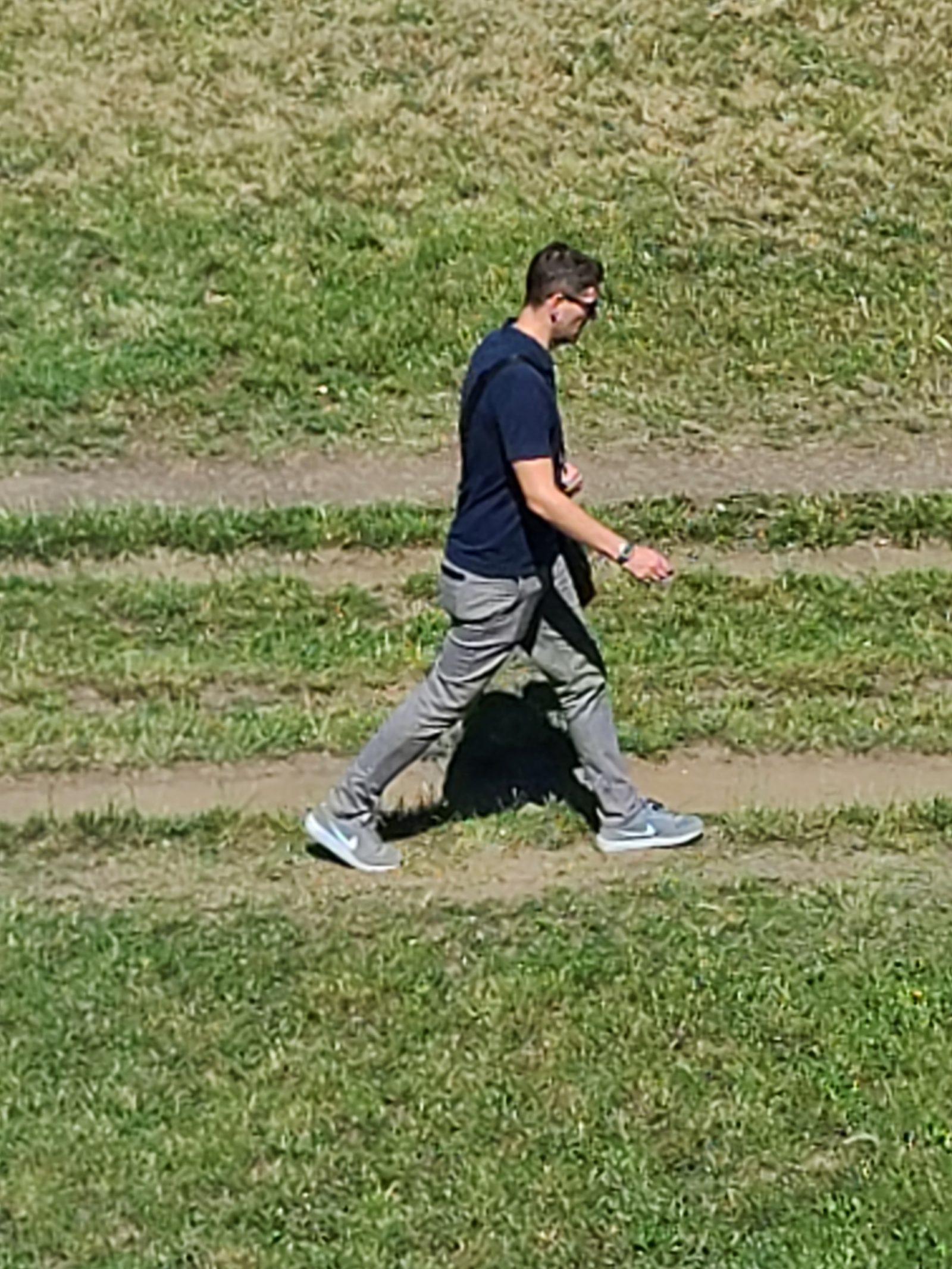
The alleged doppelgänger. The resemblance was, apparently, uncanny.
The Eastern European Question
I always said I wanted to start my European adventures in Eastern Europe and, when Poland was on the menu, I considered that Eastern Europe. I guess we Americans think of everything from the Soviet Bloc as "East." Turns out Poland is considered Central Europe. Hungary, too! Our tour guide talked about how Czechs are adamant that they are Central European, largely because of those Soviet scars. Culturally, however, they have a lot of Eastern European tendencies (again, Soviet scars). So it turns out the easiest way to shut up an annoying Czech is to refer to them as "Eastern European." So maybe I've gotten a taste of both—Eastern and Central. More exploring will be needed to test this hypothesis.
Field Notes:
• I was complimented on my Czech today. I have exactly one phrase, but apparently I've got it down to "local" quality.
• I was approached and asked for directions last night (in Czech), so that's happened on three continents now.
• I've had multiple people assume I was British, which I take as a compliment.
• I was yelled at (harshly!) by a stern German docent. We then made friends, and she asked me where in the U.K. I was from.
• Relatedly, I have now seen exactly one German smile.
A Comprehensive Analysis
I've been evaluating the pros and cons of Central Europe during my time here and I think I've distilled it down to the most important differences, Central Europe vs. 'Murica. The following is a comprehensive table:
| Things Central Europe Gets Right | Things Central Europe Gets Wrong |
|---|---|
| Food quality | The cuisine itself |
| Public transportation | Restaurant service |
| It's not freezing cold indoors | Smelling ok |
| Orderliness | Having Germans |
| Doing things with an eye toward beauty rather than money | Being happy, ever |
| Sparkling water everywhere | Being happy, ever |
| The pace of life | Being happy, ever |
I think that's all the meaningful differences, Central Europe vs. USA.